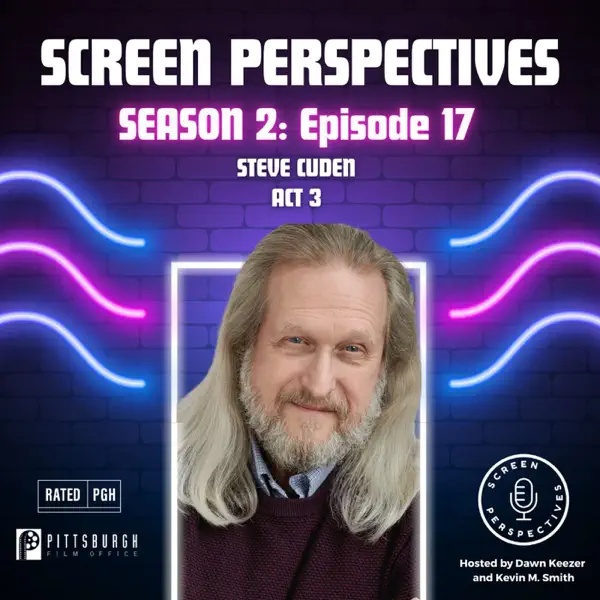
In the third and final episode of his Screen Perspectives podcast series, Steve Cuden turns his attention to the craft principles that sustain stories—and careers—over time. Drawing on decades of work across theater, television, film, and animation, Cuden offers a practical, unsentimental look at what makes audiences return and writers endure.
Catharsis: The Reason Stories Survive
At the core of Cuden’s storytelling philosophy is catharsis, which he describes as an emotional release that rewards audience investment. When a story builds properly toward catharsis—whether joyful or devastating—audiences leave feeling complete. That feeling, he explains, is what drives repeat viewings, word of mouth, and long-term success.
Cuden illustrates this idea through personal experience, including seeing Star Wars on its opening day in 1977. The immediate audience reaction, he notes, was not driven by marketing, but by instant emotional identification and complete suspension of disbelief.
Writing for Animation vs Live Action
Cuden offers a rare, detailed explanation of how writing for animation differs from live-action screenwriting. While the scripts may look identical on the page, the writer’s role is fundamentally different.
In animation, the writer is effectively the first director. Animation scripts include camera movement, sound effects, and visual direction—elements that live-action writers are trained to avoid. As a result, animation scripts are often nearly twice as long, denser, and more technically demanding.
Drawing on his time at Disney and Warner Bros., Cuden describes animation writing as inventive and playful, but also exacting. Every visual and auditory detail must be imagined, articulated, and earned on the page.
Professional Survival, Not Fantasy Careers
Cuden is blunt about the realities of building a creative life. Talent alone, he warns, does not attract opportunity. Networking, self-advocacy, and persistence are learned skills—and often uncomfortable ones.
He closes with a line that encapsulates the difference between aspiration and profession:
“The only difference between a writer and a professional writer is that the professional has figured out how to get paid.”
The episode serves as both a craft lesson and a reality check for writers navigating the long game.
Listen on Apple Podcasts below or click here for more listening options for Screen Perspectives.
Listen to Steve’s Act 1 on Screen Perspectives
Listen to Steve’s Act 2 on Screen Perspectives